Цифровата грамотност никога не е била толкова важна, колкото в днешния все по-цифровизиран свят.
Бързо променящата се медийна и информационна среда, заедно с големия брой онлайн медийни платформи и източници на информация, изисква хората не само да са уверени, но и да са информирани и критични в цифровия свят.
Предизвикателства, свързани с цифровата грамотност и дезинформацията
Във времена на криза предизвикателствата, свързани с разпространението на дезинформация и вредно съдържание, се увеличават, което оказва натиск върху нашите демокрации и благосъстоянието на хората.
В неотдавнашно проучване на Евробарометър 70 % от отговорилите европейци споделят, че често попадат на новини, за които смятат, че представят погрешно действителността или дори са неверни.
В друго проучване (Edelman Trust Barometer, 2020) 74 % от респондентите изразяват загриженост относно наличието на фалшиви новини в контекста на пандемията от COVID-19.
През 2020 г. участниците в откритата обществена консултация на Европейската комисия относно Плана за действие в областта на цифровото образование за периода 2021—2027 г. подчертават, че уменията, свързани с цифровата грамотност, като например различаването на факти и фалшива информация, управлението на „информационното претоварване“ и безопасната навигация онлайн, се признават за трите най-важни цифрови умения, необходими за 21-ви век.
Образованието и обучението играят решаваща роля за предоставянето на гражданите на умения за критично мислене, необходими за извършване на преценка в онлайн пространството, като се вземат предвид неговите специфични явления, свързани с наличието на алгоритми, „информационни балони“ и „ехо камери“.
За да се гарантира ефективното развитие на цифровата грамотност и борбата с дезинформацията чрез процеса на образование и обучение, учителите и преподавателите трябва да получат допълнителна подкрепа с насоки и практически примери.
Ключови дейности
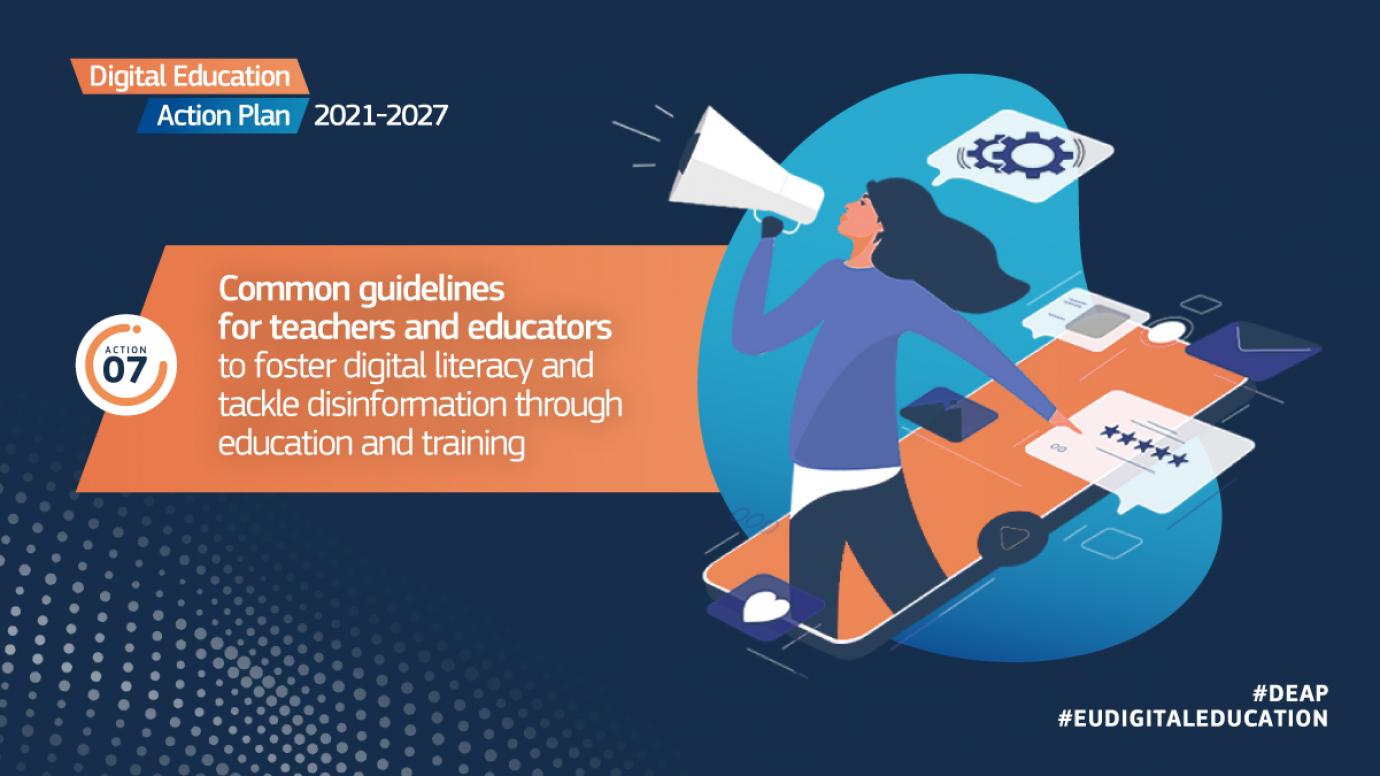
За да подпомогне справянето с тези предизвикателства, през октомври 2022 г. Комисията публикува насоки, чиято цел е да се помогне на учителите и преподавателите да насърчават цифровата грамотност и да се справят с дезинформацията чрез образование и обучение.
В насоките се предоставят практически указания за учителите и преподавателите, включително практически съвети и планове за действие. Те са предназначени за учители в началното и средното образование със или без специализирани познания в областта на цифровото образование. Насоките са придружени от окончателен доклад, в който са обобщени основните констатации и препоръки на експертната група.
Насоките и окончателният доклад бяха разработени с подкрепата на неформалнаекспертна група на Комисията , обединяваща експертния опит на общността в областта на образованието и обучението, научните среди, телевизионното и радиоразпръскване, частния сектор и други.
Повече информация за насоките можете да намерите в информационния документ, инфографиката и краткия видеоклип с обяснения по-долу.
The guidelines and the final report were developed with the support of an informal Commission expert group. Its members bring together expertise from the education and training community, academia, broadcasting, the private sector and others.
Очаквани резултати
- по-добра обществена осведоменост и по-добро познаване на дезинформацията
- по-широко разбиране на цифровата грамотност, постигнато чрез образование и обучение
- отговорно и безопасно използване на цифровите технологии
Резултати
- Насоки в помощ на учителите и преподавателите за насърчаване на цифровата грамотност и справяне с дезинформацията чрез образование и обучение
- Окончателен доклад на експертната група на Комисията относно борбата с дезинформацията и насърчаването на цифровата грамотност чрез образование и обучение
График
- октомври 2021 г. — юли 2022 г. — заседания на експертната група на Комисията
- октомври 2022 г. — публикуване на насоките и окончателния доклад на експертната група
Финансиране
Това действие се финансира от програмата на ЕС „Еразъм+”.
За контакти
Ако искате да научите повече за това действие, можете да се свържете с нас по електронна поща на адрес EAC-DIGITALEDUCATION@ec.europa.eu.
Следвайте @EUDigitalEdu в Twitter за последните новини и тенденции във връзка с това действие и целия план за действие в областта на цифровото образование..