
Digitale færdigheder har aldrig været så vigtige som nu i vores stadig mere digitaliserede verden.
Medie- og informationslandskabet ændrer sig hurtigt, og da der desuden er et voksende antal onlinebaserede medieplatforme og informationskilder, er det nødvendigt, at folk ikke blot kan færdes sikkert i den digitale verden, men også har viden om den og kan være kritiske.
Digitale færdigheder og problemer med misinformation
I krisetider opstår der flere udfordringer vedrørende spredning af misinformation og skadeligt indhold, hvilket belaster vores demokratier og den enkeltes trivsel.
I en nylig Eurobarometer-undersøgelse gav 70 % af de deltagende europæere udtryk for, at de dagligt oplever nyheder, som efter deres mening ikke er en korrekt gengivelse af virkeligheden eller endda er falske.
I en anden undersøgelse (Edelman Trust Barometer, 2020) gav 74 % af deltagerne udtryk for bekymring over tilstedeværelsen af falske nyheder i forbindelse med covid-19-pandemien.
I 2020 understregede svarpersonerne i Europa-Kommissionens åbne offentlige høring om handlingsplanen for digital uddannelse (2021-2027), at digitale færdigheder, f.eks. at kunne skelne fakta fra falske oplysninger, administrere meget store informationsmængder og navigere sikkert online, ses som de tre vigtigste digitale færdigheder i det 21. århundrede.
uddannelse er afgørende for at give borgerne de nødvendige færdigheder til at kunne forholde sig kritisk til og udvise god dømmekraft i den digitale verden med dens algoritmer, informationsbobler og ekkokamre.
For at sikre, at elever og studerende udvikler gode digitale færdigheder og evnen til at håndtere misinformation gennem uddannelse, skal lærerne have mere hjælp i form af vejledning og praktiske eksempler.
De vigtigste aktiviteter
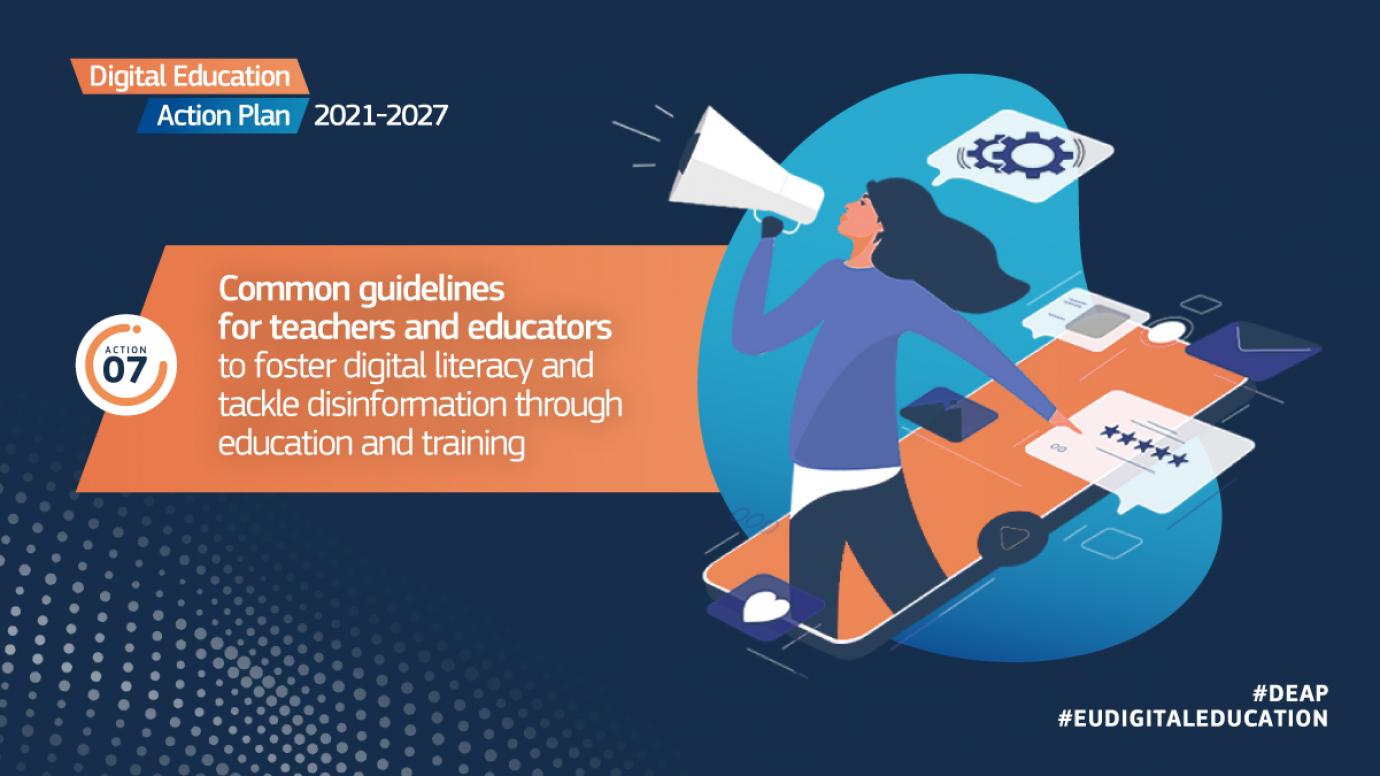
For at hjælpe med at håndtere disse udfordringer udsendte Kommissionen i oktober 2022 retningslinjer, der skal lette lærernes arbejde med at fremme digitale færdigheder og bekæmpe misinformation gennem uddannelse.
Retningslinjerne indeholder praktisk vejledning til lærere, f.eks. praktiske tips og aktivitetsplaner. De er lavet til lærere i folkeskolen og gymnasiet, både til dem med og uden specialviden om digital uddannelse. Sammen med retningslinjerne er der udgivet en endelig rapport, som samler ekspertgruppens vigtigste resultater og anbefalinger.
Retningslinjerne og den endelige rapport blev udarbejdet med støtte fra en uformel ekspertgruppe i Kommissionen, som samlede ekspertise fra bl.a. uddannelsessystemet, den akademiske verden, radio og tv og den private sektor.
Få mere at vide om retningslinjerne i faktabladet, infografikken og den korte video nedenfor.
The guidelines and the final report were developed with the support of an informal Commission expert group. Its members bring together expertise from the education and training community, academia, broadcasting, the private sector and others.
Forventede resultater
- bedre generelt kendskab til og viden om misinformation
- en bredere forståelse af digitale færdigheder gennem uddannelse
- ansvarlig og sikker brug af digital teknologi.
Resultater
- retningslinjer til lærere om fremme af digitale færdigheder og bekæmpelse af misinformation gennem uddannelse
- endelig rapport fra Kommissionens ekspertgruppe om håndtering af misinformation og fremme af digitale færdigheder gennem uddannelse.
Tidslinje
- oktober 2021 - juli 2022: møder i Kommissionens ekspertgruppe
- oktober 2022: udgivelse af retningslinjerne og ekspertgruppens endelige rapport.
Finansiering
Foranstaltning 7 finansieres via EU's Erasmus+-program.
Kontakt os
Hvis du er interesseret i at vide mere om foranstaltning 7, kan du kontakte os på EAC-DIGITALEDUCATION@ec.europa.eu.
Følg @EUDigitalEdu på Twitter, og få de seneste nyheder om foranstaltning 7 og den samlede handlingsplan for digital uddannelse.